The Lentor Gardens Residences Review: Analyzing the Upside and the Risks
As the Lentor Hills estate rapidly transforms into one of Singapore's most talked-about new enclaves, Lentor Gardens Residences by Kingsford Development has entered the spotlight. But with over 4,000 new homes slated for the precinct, does this project genuinely offer a safe entry price, or are buyers staring down a highly competitive exit strategy in a few years?
Let's break down the benefits, the locational perks, and the hard truths about buying into Lentor Gardens.
1. The Price Advantage and Developer Pedigree
The most significant draw for Lentor Gardens is its foundational land cost, which directly impacts the developer's breakeven and launch prices.
- A Favourable Land Cost: Kingsford secured the Lentor Gardens site at a highly competitive $920 psf ppr. This is one of the most affordable land rates in the area. By comparison, the recent Lentor Central GLS site was fiercely contested and ultimately awarded to a GuocoLand-led consortium at a staggering benchmark of $1,278 psf ppr in early 2026.
- A Safety Margin for Buyers: Because Kingsford bought in at a lower cost compared to its upcoming neighbours, they have the flexibility to price Lentor Gardens more affordably. This potentially offers early buyers a safer entry price and a built-in buffer for future capital appreciation before the more expensive Lentor Central project launches.
- Developer Track Record: Kingsford is a heavyweight in executing mega-projects. Their portfolio includes highly successful, large-scale developments like Normanton Park, The Chuan Park, and the upcoming Marina Gardens Lane. Their ability to move volume efficiently suggests strong execution capabilities for a project of this size.
Understanding URA GFA Harmonization
To accurately compare prices across the Lentor enclave, we must account for the URA GFA Harmonization guidelines (effective 1 June 2023). Under the new rules, air-con ledges and void spaces are excluded from the strata saleable area. Post-harmonization units are 100% usable space, causing their headline PSF to appear ~5% higher than pre-harmonized projects for the same actual living space.
Pre-Harmonized Era
Includes air-con ledges & voids in strata area. Denominator is larger, so quoted PSF looks lower.
Post-Harmonized Era
Excludes non-functional spaces. Denominator is smaller (100% liveable), so quoted PSF looks higher.
vs Pre-Harmonized Equivalent
Normalizing the post-harmonized projects with a standard -5% GFA adjustment for an apples-to-apples comparison.
Lentor GLS Sites Pricing & Harmonization Ledger
Apples-to-apples land cost and sale price comparison in District 26
| Project Name | Launch Date | Land Bid (psf ppr) | Units | Quoted Launch PSF | Pre-Harmonized Equivalent |
|---|---|---|---|---|---|
| Lentor Modern | Sept 2022 | $1,204 | 605 | $2,248 | $2,248 |
| Lentor Hills Residences | July 2023 | $1,060 | 598 | $2,239 | $2,239 |
| Hillock Green | Nov 2023 | $1,108 | 474 | $2,108 | $2,108 |
| Lentoria | March 2024 | $1,130 | 267 | $2,120 | $2,120 |
| Lentor Mansion | March 2024 | $985 | 533 | $2,269 | $2,156 (-5%) |
| Lentor Central Residences | March 2025 | $982 | 477 | $2,200 | $2,090 (-5%) |
| Lentor Gardens Residences | July 2026 | $920 | 499 | Expected $2,300 | Expected $2,185 (-5%) |
| (Upcoming) | - | $1,278 | - | - | - |
2. Established Connectivity and Lifestyle Amenities
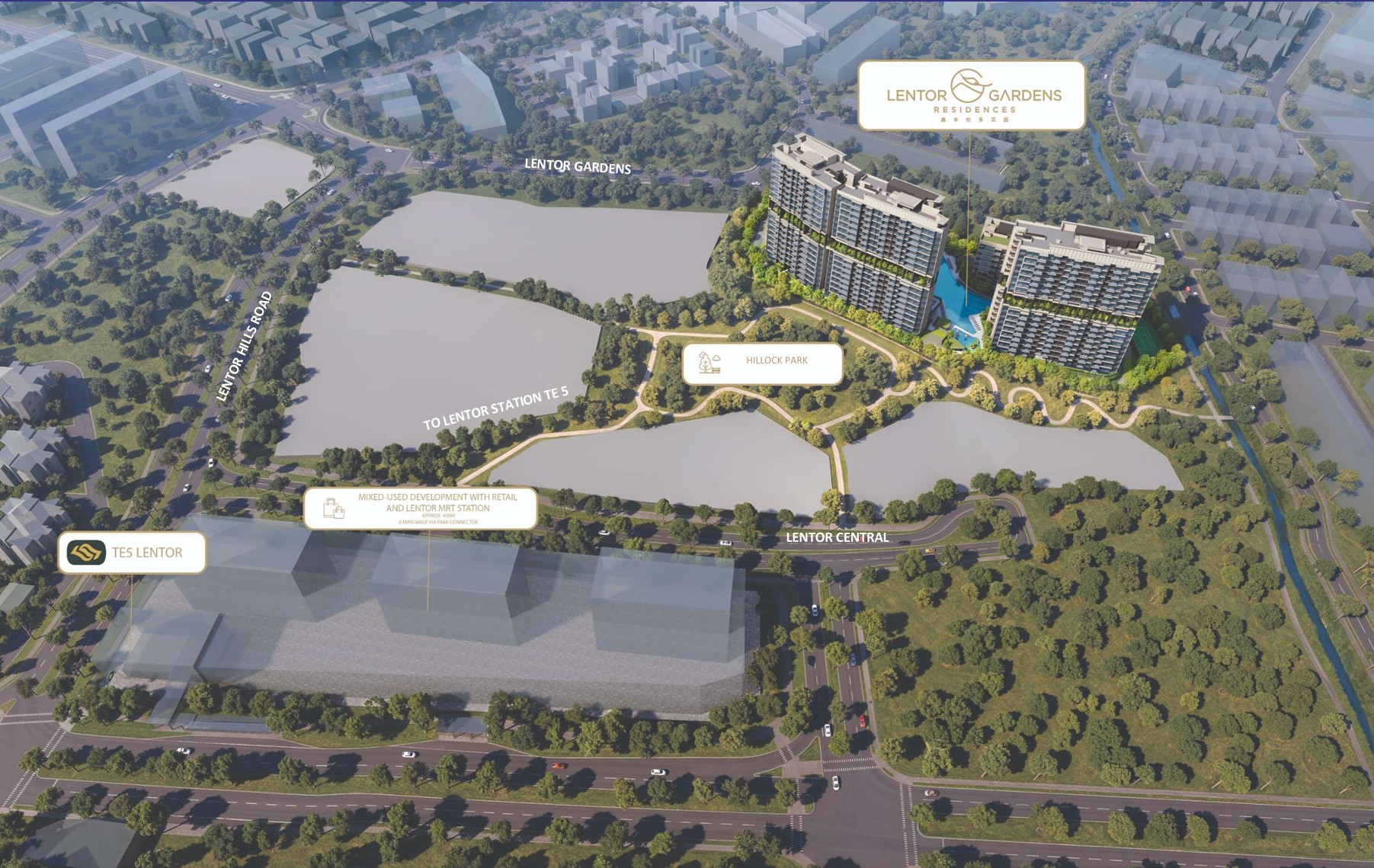
Unlike early pioneer projects in raw, undeveloped estates, Lentor Gardens benefits from infrastructure that is either already operational or nearing completion.
- Seamless Transit: The fully functional Lentor MRT station (Thomson-East Coast Line) establishes Lentor as a vital transport node, allowing residents to reach the Orchard Road shopping belt and the CBD within a quick 20 to 30-minute ride.
- Immediate Conveniences: Residents won't have to wait years for retail options to catch up. The Lentor Modern Mall is already bringing a supermarket, F&B outlets, and daily necessities right to the neighbourhood's doorstep.
- Driving Accessibility: The upcoming North-South Corridor (NSC) will significantly cut down driving times to the city centre, providing a seamless and faster commute for drivers.
- Reputable Schools: The development is positioned favourably for families, with a high likelihood that certain blocks will fall within the coveted 1km radius of CHIJ St. Nicholas Girls' School (buyers should always verify specific block addresses using the OneMap SchoolQuery tool).
3. The Prestige Factor and Built-In Upgrader Demand
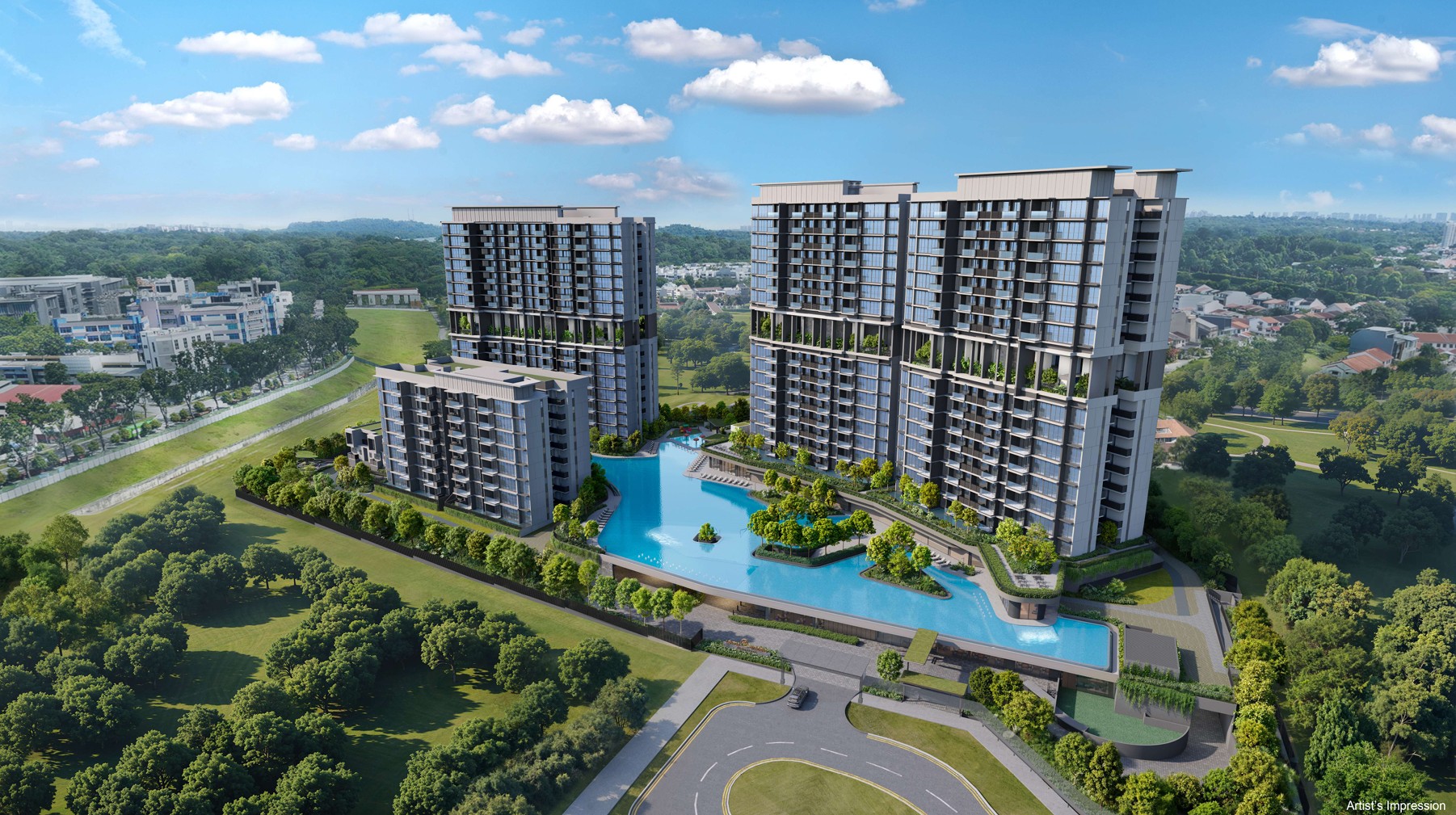
The Lentor precinct is distinctly positioned as a premium residential node, which plays a major role in its long-term wealth preservation.
- A Landed and Private Enclave: Lentor is an exclusively private residential zone nestled among lush greenery and low-density landed homes. This creates a prestigious, serene environment that heavily contrasts with denser HDB towns.
- A Natural Upgrader Pool: The estate borders mature HDB towns like Ang Mo Kio. With developments like the Central Weave BTO generating future million-dollar HDB flats, Lentor Gardens represents a logical, aspirational upgrade path for wealth-flush HDB sellers looking to transition into private property.
- Proven Early Gains: The precinct has already shown strong momentum. Buyers who took the plunge early during the 2022 Lentor Modern launch have already seen strong paper gains, with some early entrants sitting on potential appreciations of up to 20% based on current neighbourhood benchmark prices.
4. Unit Mix Strategy and The "Unblocked View" Dilemma
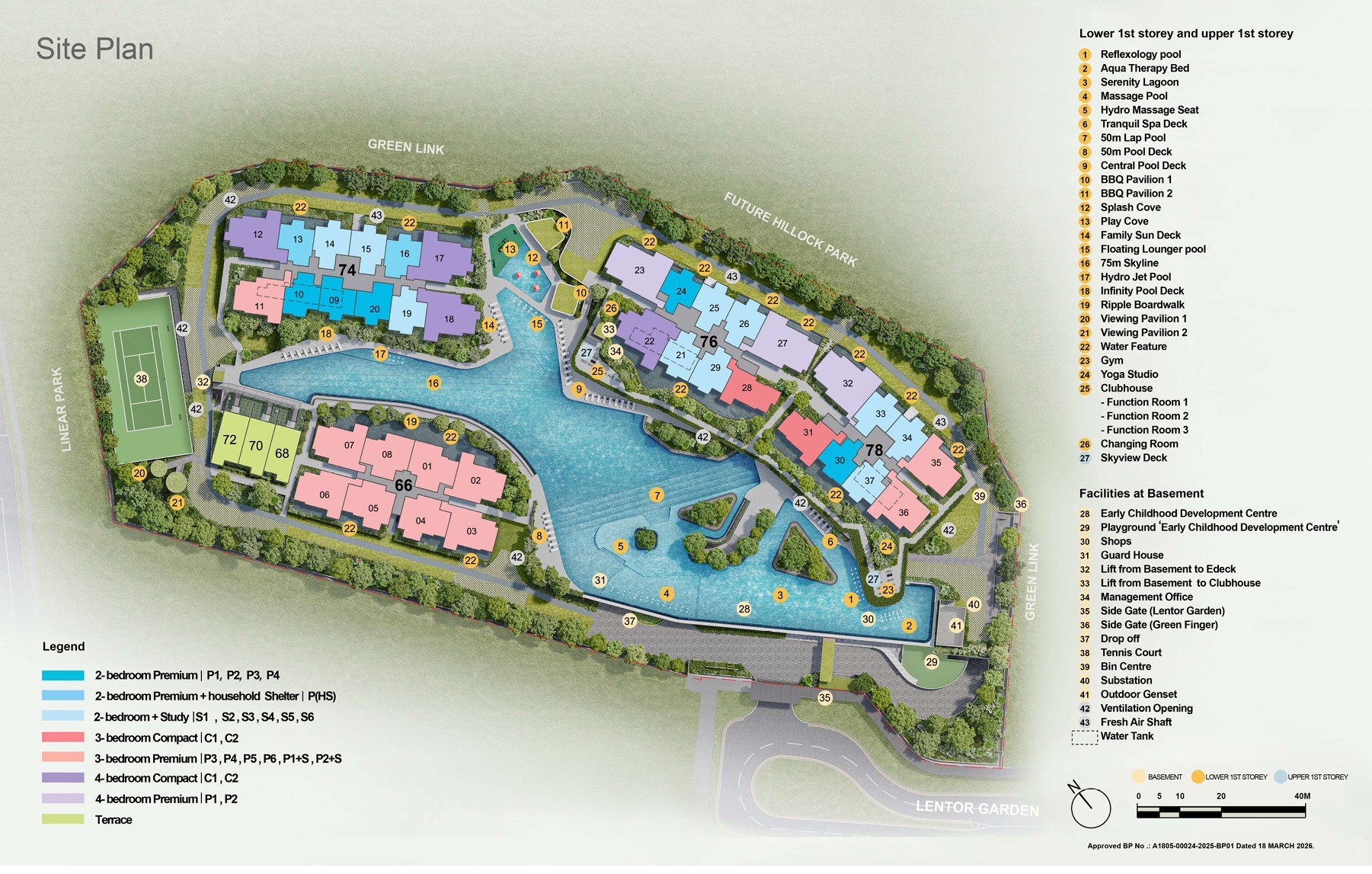
When evaluating the physical attributes of Lentor Gardens Residences, two major factors stand out: the distribution of unit types and the facing of the blocks.
- A Dual-Target Strategy: Investors vs. Owner-Occupiers: When looking at the unit mix, Lentor Gardens employs a balanced strategy, but one that creates distinct battlegrounds. Exactly 50.5% of the development comprises 2-bedroom units, a segment highly targeted at investors seeking rental yield and manageable quantums. The remaining 49.5% is dedicated to 3-bedroom and larger layouts tailored for families and genuine owner-occupiers. While this is a healthy supply, it means that families looking to lay down roots in this premium enclave are fighting for a finite pool of suitable homes.
- The West-Facing Trade-off: A major selling point for Lentor Gardens is its premium views. Many units boast spectacular, unblocked vistas, particularly those facing West toward the low-density landed homes. However, buyers must weigh this premium view against a practical reality: the West-facing stacks will bear the brunt of the afternoon heat. If you are aiming for an unblocked landed-facing unit, you must be prepared for the "West sun" scenario and plan accordingly with solar films, heavy blinds, or increased air-conditioning use.
Lentor Gardens Residences Final Unit Mix Tally
| Unit Type | No. of Units | Percentage |
|---|---|---|
| 2-Bedroom | 252 | 50.50% |
| 3-Bedroom | 139 | 27.86% |
| 4-Bedroom | 105 | 21.04% |
| Strata Terrace | 3 | 0.60% |
| Total | 499 | 100% |
5. Food for Thought: The Financial Reality Check
While the narrative sounds excellent, astute buyers must look at the math and the macro-environment.
- Stretching the Average Buyer: Even with a "safe entry price," the sheer quantum is daunting. At an estimated $2,300 to $2,500 psf, a standard 3-bedroom unit (approx. 936 sqft) will carry a price tag of $2.2M to $2.5M. Once you factor in Buyer's Stamp Duty (BSD) and elevated interest rates, the true total cost of ownership easily swells to $2.4M to $2.7M for a premium 3-bedroom layout. This heavily stretches the affordability limits of the average Singaporean household.
- The Saturated Exit: While early buyers might have paper gains, the true test is the eventual exit. The Lentor master plan is injecting over 4,000 new homes into the immediate vicinity. When these projects hit the secondary market in a few years, there will be massive competition among sellers. To make a meaningful profit, an owner would need the next buyer to pay a 20% to 25% premium—pushing the future cost of a 3-bedroom past the $3M mark. The question remains: who is the target demographic that can comfortably absorb that price point in District 26?
- Lack of a Major Employment Node: Unlike areas such as one-north (Tech) or the CBD (Finance), Lentor does not possess a major localized working node. Without high-paying industry hubs right next door, rental yields may lack the explosive growth seen in traditional investment hotspots, making this area much more reliant on owner-occupier demand rather than investor-driven rental income.
The Verdict
Lentor Gardens Residences offers one of the most compelling entry prices in an increasingly expensive neighbourhood, backed by a proven developer and excellent connectivity. However, buyers must approach with their eyes open regarding the overall quantum costs and the intense future competition when it comes time to sell. To navigate these risks, the careful selection of specific stacks is absolutely critical to ensure you are in the most favourable position for future resale and premium valuations. It remains a fantastic choice for genuine owner-occupiers who value the enclave's lifestyle, but those banking purely on speculative, short-term investment gains should tread carefully.